

Toyota EV Charging Explained for Massachusetts and Rhode Island Drivers
EV charging becomes much easier once it is matched to the way you actually drive. For many Massachusetts and Rhode Island shoppers, the best EV routine is simple: charge at home most of the time, use public Level 2 charging when it fits into errands, and rely on DC fast charging for longer trips or quick top-offs.
Nucar Toyota of North Attleboro helps drivers compare Toyota EVs, hybrids, and plug-in hybrids based on real ownership needs, not just spec sheets. That matters whether your week includes commuting along I-295, driving across Elm St and High St, heading into Providence, or packing up for a weekend outside the usual routine.
Explore Toyota electrified vehicles
The Three EV Charging Levels
EV charging is usually grouped into three categories: Level 1, Level 2, and DC fast charging. Each one has a different role, and understanding the difference can help you decide whether an all-electric Toyota fits your daily life.
Level 1 Charging
Level 1 charging uses a common household-style 120-volt outlet. It is the slowest charging option and can take 40–50+ hours to charge a battery-electric vehicle to 80% from empty, according to the U.S. Department of Transportation.¹
That does not mean Level 1 is useless. It may work for drivers with short daily mileage, predictable parking, and plenty of overnight charging time. If your driving is mostly local, such as quick errands around Downtown North Attleboro, school drop-offs, or short trips near World War I Memorial Park and Zoo, Level 1 may cover more of your routine than expected.
For many EV owners, though, Level 1 is better as a backup than a primary charging plan.
Level 2 Charging
Level 2 charging is the home-charging setup many EV shoppers imagine when they think about plugging in overnight. It typically uses 240-volt residential service or 208-volt commercial service and can charge a battery-electric vehicle to 80% from empty in about 4–10 hours, depending on the vehicle and equipment.¹
For a household with a garage, driveway, or dedicated parking spot, Level 2 charging can make EV ownership feel natural. Plug in after work, let the vehicle charge while you sleep, and start the next morning with the range you need for commuting, errands, and family plans.
Level 2 charging can be especially useful for drivers who regularly travel between North Attleboro, Norton, and Mansfield, or who want more flexibility during a busy week.
DC Fast Charging
DC fast charging is designed for speed. It is most useful during road trips, heavy driving days, or times when you need to add range more quickly away from home. DOT guidance notes that DC fast charging can often charge a battery-electric vehicle to 80% in about 20 minutes to 1 hour, depending on the charger, vehicle, battery temperature, and charging conditions.¹
Fast charging is not usually the cheapest or most convenient way to charge every day. Its biggest value is flexibility. It helps extend an EV beyond the daily routine, giving drivers more confidence for highway travel, weekend plans, and longer New England drives.
How Long Does Toyota EV Charging Take?
Toyota EV charging time depends on the vehicle, charging equipment, battery temperature, state of charge, weather, and charger output. A nearly empty battery usually charges faster at first, then slows as it gets closer to full. Cold weather can also slow charging, especially during winter mornings or long highway trips.
A simple way to think about charging time:
- Level 1: Best for short daily mileage, backup charging, or plug-in hybrid drivers with smaller batteries.
- Level 2: Best for regular home charging, overnight charging, and daily EV ownership.
- DC fast charging: Best for road trips, quick stops, and adding range away from home.
Charging is less like filling a gas tank and more like charging a phone. Most owners do not wait until the battery is empty. They plug in when it is convenient and build charging around parking time they already have.
Home Charging Is the Foundation for Most EV Owners
Home charging is often what makes EV ownership feel easy. Instead of making a separate stop for fuel, many drivers charge while the vehicle is parked overnight.
A good home-charging plan starts with practical questions:
- Can the vehicle park near a safe charging location?
- Is there a garage, driveway, assigned parking spot, or outdoor-rated setup?
- Would Level 1 charging cover your weekday mileage, or would Level 2 be a better fit?
- Does your electrical panel support the charger you want?
- Would scheduled overnight charging fit your household routine?
- Do you need permission from a landlord, condo association, or property manager?
A licensed electrician can help evaluate installation needs. Apartment and condo residents should look closely at shared charging options, workplace charging, nearby public chargers, and whether a hybrid or plug-in hybrid may be a better fit right now.
Public Charging Around Your Routine
Public charging works best when it supports places you already go. Level 2 public charging can be useful while parked for errands, work, shopping, a meal, or a longer appointment. DC fast charging is better when the goal is to add range quickly and get back on the road.
For North Attleboro-area drivers, the most useful public-charging strategy is to think in corridors and routines. That might include travel near I-95 and I-295, weekday drives toward Smithfield or East Providence, or weekend routes that take you beyond Bristol County.
One important note: public charging locations change, and not every charger is compatible with every EV. Always confirm the station, connector, speed, pricing, and availability before depending on it for a trip.
Toyota EV Charging Compatibility: NACS, J1772, CCS, and Adapters
Toyota’s newer battery-electric vehicles are moving toward NACS, the North American Charging System. For shoppers, the practical benefit is broader access to compatible high-speed DC charging, including access to eligible Tesla Supercharger Network locations for supported Toyota BEVs.²
Toyota says the 2026 Toyota bZ comes with a standard NACS inlet, Plug & Charge capability, and access to more than 25,000 additional NACS charger plugs through the Tesla Supercharger Network. Toyota also says 2023–2025 Toyota bZ4X drivers can access SAE J3400 NACS plugs with a complimentary adapter available from Toyota dealers.²
That connector language can sound technical, but the shopping takeaway is straightforward:
- NACS is the connector Toyota is adopting for newer BEVs.
- J1772 is commonly associated with Level 1 and Level 2 AC charging.
- CCS is used by many DC fast chargers.
- Adapters help preserve access to different charging equipment when the vehicle and charger use different connectors.
- Compatibility still matters, so drivers should confirm the vehicle, model year, charging station, and approved adapter before plugging in.
Use Toyota-approved charging accessories and confirm the correct charging process for the specific vehicle. That is especially important during Toyota’s transition from earlier charging setups to newer NACS-equipped BEVs.
Plug & Charge Makes Public Charging Easier
Plug & Charge can reduce the number of steps needed to start a public charging session. After setup through the Toyota app, compatible Toyota BEVs and participating charging stations can communicate automatically when the vehicle is plugged in.²
That can make public charging feel less dependent on juggling multiple apps, screens, and payment steps. Availability still depends on the vehicle, charging network, account setup, and station capability, so it is worth confirming before relying on Plug & Charge during a trip.
What Toyota EV Owners Should Know Before Using Tesla Superchargers
Toyota’s NACS transition gives supported Toyota BEV drivers access to compatible Tesla Supercharger DC fast chargers, but the details matter. Not every EV, station, connector, or adapter situation is the same.
Before using a Tesla Supercharger with a Toyota EV, confirm:
- Your Toyota model and model year are supported.
- You have the correct inlet or Toyota-approved adapter.
- The Supercharger location is compatible with your vehicle.
- Your Toyota app setup is complete where required.
- The vehicle’s charging route guidance or charging app shows the stop as usable.
This is where preparation helps. A few minutes of checking before leaving can prevent wasted time at an incompatible charger.
Toyota EVs to Know
Toyota’s all-electric lineup gives shoppers several ways to approach EV ownership, from everyday SUV driving to more rugged utility and compact crossover style.
Toyota bZ
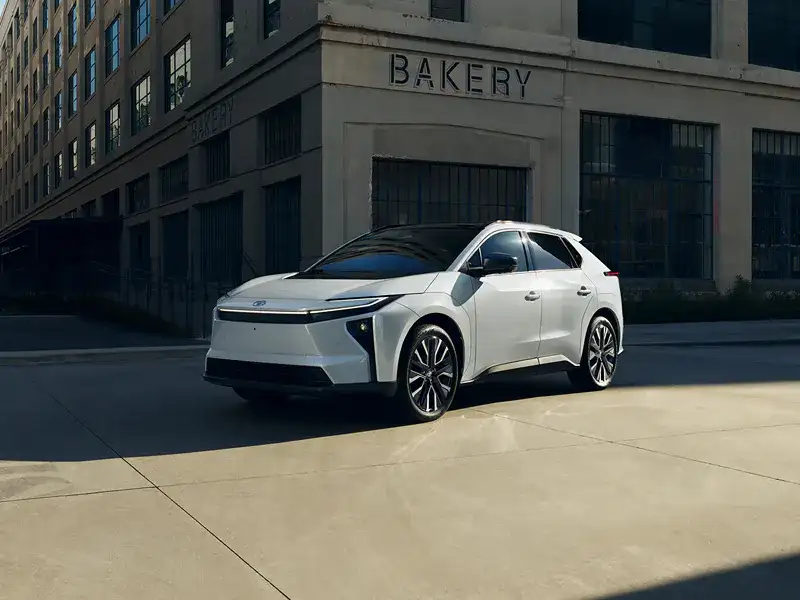
The 2026 Toyota bZ advances the previous bZ4X formula with updates to range, performance, charging, and design. Toyota says models equipped with the larger 74.7-kWh battery are projected to offer up to 314 miles of manufacturer-estimated range on a full charge.³
The bZ is the Toyota EV to consider if you want an all-electric SUV for commuting, errands, and daily comfort, with newer Toyota charging compatibility built into the ownership experience.
Toyota bZ Woodland
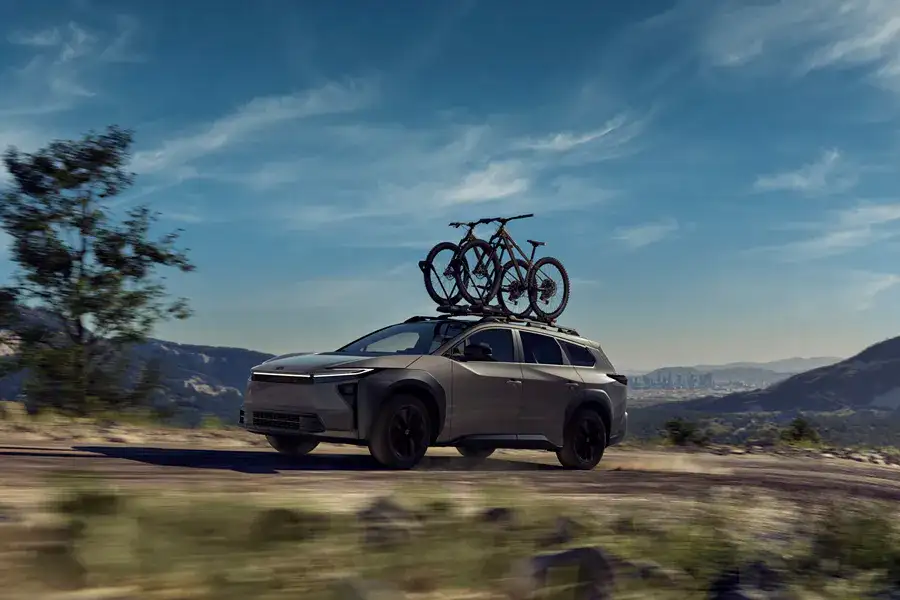
The 2026 Toyota bZ Woodland adds a more rugged all-electric SUV personality. Toyota says it comes with standard all-wheel drive, X-MODE, 375 combined system horsepower, more than 30 cubic feet of rear cargo area, 8.4 inches of ground clearance, and up to 3,500 pounds of towing capacity.⁴
Toyota also lists an EPA-estimated range rating of up to 281 miles, or 260 miles when equipped with optional All-Terrain tires.⁴ That makes the bZ Woodland an appealing option for drivers who want EV efficiency with added utility for gear, pets, weekend plans, and changing New England road conditions.
Learn more about the Toyota bZ Woodland
Toyota C-HR
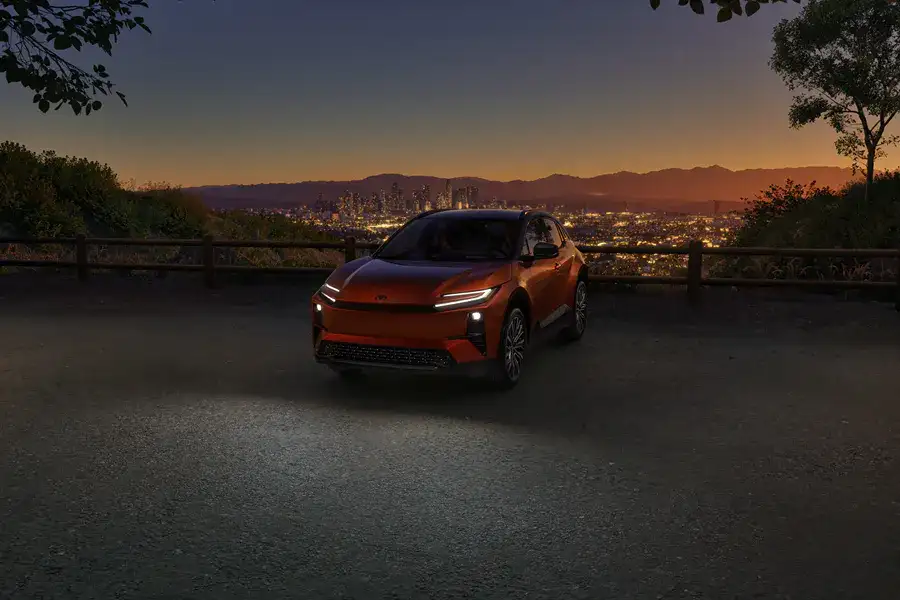
The Toyota C-HR returns as an all-electric compact SUV with a sportier, more urban personality. Toyota says the 2026 C-HR has standard dual-motor all-wheel drive, 338 net combined system horsepower, up to 287 miles of EPA-estimated range on the SE grade, and DC fast-charging capability that can deliver a 10–80% charge in around 30 minutes under ideal conditions.⁵
For drivers who want a smaller Toyota EV for commuting, parking, errands, and daily driving, the C-HR brings a more compact footprint without giving up all-wheel-drive confidence.
Learn more about the Toyota C-HR
EV, Hybrid, or Plug-In Hybrid: Which Toyota Fits Best?
The right Toyota electrified vehicle depends on charging access, driving distance, budget, parking, and how much planning you want in your routine.
Choose a Toyota EV if:
A Toyota EV may be a strong fit if you can charge at home or work, drive predictable daily miles, and want to reduce gasoline stops. EV ownership can be especially convenient when the vehicle can charge overnight and public DC fast charging is used mainly for longer drives.
Choose a Toyota Hybrid if:
A Toyota hybrid may be better if you want strong fuel efficiency without plugging in. Hybrids are often the simpler choice for drivers who park on the street, rent, live in a condo without charging access, or frequently travel without wanting to plan charging stops.
Choose a Toyota Plug-In Hybrid if:
A Toyota plug-in hybrid may work well if most of your driving is local but you still want gasoline flexibility for longer trips. Drivers who can charge regularly may be able to handle many short drives on electric power while keeping the convenience of a gas engine when needed.
Compare Toyota electrified options
New England Weather and EV Range
Cold weather can reduce EV range and slow charging. Battery temperature, cabin heat, tire pressure, driving speed, wind, road conditions, and highway use can all affect how far an EV travels on a charge.
That does not make EV ownership impractical in Massachusetts or Rhode Island. It just means winter planning matters. Helpful habits include:
- Preconditioning the cabin while the vehicle is plugged in.
- Keeping tires properly inflated.
- Leaving extra range for cold highway drives.
- Using heated seats and steering wheel heat when equipped.
- Checking charger availability before longer winter trips.
- Avoiding arrival at a charger with too little remaining range.
Summer has its own efficiency factors too. Air conditioning, roof-mounted cargo, heavy loads, and higher highway speeds can all affect range. Good planning makes the difference in every season.
EV Road Trip Planning Tips
EV road trips are easiest when charging stops are planned around breaks you would likely take anyway. Instead of thinking of charging as a delay, build it into meals, rest stops, shopping, or a short walk.
Before a longer drive from North Attleboro, use your vehicle tools and charging apps to identify DC fast chargers along the route. Toyota says BEVs with Toyota Audio Multimedia can enable Apple Maps EV Routing through Apple CarPlay, adding route guidance with EV charging information.²
Smart EV road-trip habits include:
- Start with a comfortable charge before leaving home.
- Plan the first charging stop before you get on the highway.
- Check connector compatibility and station status.
- Identify a backup charging location.
- Leave extra range in winter, heavy rain, or high-traffic conditions.
- Use DC fast charging for longer routes, not as your only daily charging plan.
- Keep the Toyota app and any needed charging-network apps ready.
A Toyota EV can work well for New England travel when the route and charging plan are clear before departure.
EV Charging Checklist Before You Buy
A short charging reality check can help you choose confidently before you commit to an EV.
Ask yourself:
- Where will I charge most often?
- Can I install Level 2 charging at home?
- How many miles do I drive on a normal weekday?
- Do I often drive long distances with little notice?
- Am I comfortable using charging apps and route planning?
- Do I need AWD, extra cargo space, or towing capability?
- Would a hybrid or plug-in hybrid fit my current parking situation better?
These questions do not push every shopper toward the same answer. They help identify the Toyota that fits your life now.
EV Charging FAQs
Can I charge a Toyota EV at home?
Yes. Toyota EVs can be charged at home using compatible Level 1 or Level 2 charging equipment. Level 2 charging is usually the better fit for drivers who want faster overnight charging.
Is Level 1 charging enough for a Toyota EV?
Level 1 charging may be enough for short daily driving, but it is slow for a full battery-electric vehicle recharge. Drivers with longer commutes or busier schedules often prefer Level 2 charging at home.
How long does Level 2 charging take?
Level 2 charging can charge a battery-electric vehicle to 80% from empty in about 4–10 hours, depending on the charger, vehicle, battery size, temperature, and charging conditions.¹
Can the 2026 Toyota bZ use Tesla Superchargers?
Toyota says the 2026 Toyota bZ has a standard NACS inlet and access to more than 25,000 additional NACS charger plugs through the Tesla Supercharger Network.² Drivers should confirm station compatibility before relying on a specific charging stop.
Do Toyota EVs need an adapter for public charging?
Some Toyota EVs may need adapters depending on the model year and charging equipment. Toyota says 2023–2025 bZ4X drivers can access SAE J3400 NACS plugs with a complimentary adapter available from Toyota dealers.²
What is Plug & Charge?
Plug & Charge allows compatible Toyota BEVs and participating charging stations to communicate automatically after setup, helping simplify public charging sessions.²
Is a Toyota EV good for New England winters?
A Toyota EV can work well in New England, but winter planning matters. Cold temperatures can reduce range and affect charging speed, so it is smart to leave extra range, precondition while plugged in, and plan longer trips carefully.
Is a hybrid better if I cannot charge at home?
A hybrid may be the better fit if you do not have reliable home, workplace, or nearby public charging. Toyota hybrids do not need to be plugged in, which can make them easier for drivers who want efficiency without changing their fueling routine.
Should apartment or condo residents buy a Toyota EV?
Apartment and condo residents can own an EV successfully, but charging access should be reviewed first. If home charging is limited, look for workplace charging, shared property charging, nearby public Level 2 charging, and convenient DC fast charging. If those options are not practical, a Toyota hybrid or plug-in hybrid may be easier.
Which Toyota EV is best for commuting near North Attleboro?
The best Toyota EV depends on your commute, charging access, cargo needs, and preferred vehicle size. The Toyota bZ offers everyday SUV versatility, the bZ Woodland adds more rugged utility, and the C-HR brings a smaller, sportier electric crossover profile.
Find the Right Toyota EV at Nucar Toyota of North Attleboro
EV ownership is not about memorizing every charger type or chasing every new connector update. It is about finding a Toyota that fits your parking, commute, family routine, and weekend plans. Nucar Toyota of North Attleboro can help you compare EVs, hybrids, and plug-in hybrids with clear guidance, useful inventory tools, and a team that understands how local drivers use their vehicles across North Attleboro, Bristol County, and nearby Rhode Island communities.
Visit Nucar Toyota of North Attleboro at 620 South Washington Street, browse Toyota electrified inventory, value your trade, or apply for financing online. However you choose to drive into the future, Everyone loves a Nucar!
Browse Toyota electrified inventory
Value your trade
Apply for financing
Sources
¹ U.S. Department of Transportation, “Charger Types and Speeds.” (Department of Transportation)
² Toyota USA Newsroom, “2026 Toyota bZ Goes on Sale with Upgraded Convenience Features, Expanded Charging Network Options for all Toyota BEV Drivers.” (Toyota USA Newsroom)
³ Toyota USA Newsroom, “Toyota bZ All Electric SUV Adds Range, Charging and Exterior Updates for 2026.” (Toyota USA Newsroom)
⁴ Toyota USA Newsroom, “Toyota’s All-Electric Lineup Gains Rugged, Powerful New bZ Woodland SUV.” (Toyota USA Newsroom)
⁵ Toyota USA Newsroom, “2026 Toyota C-HR Puts Sporty, Stylish Spin on the Compact Electric SUV.” (Toyota USA Newsroom)
0 comment(s) so far on Toyota EV Charging Explained for Massachusetts and Rhode Island Drivers